
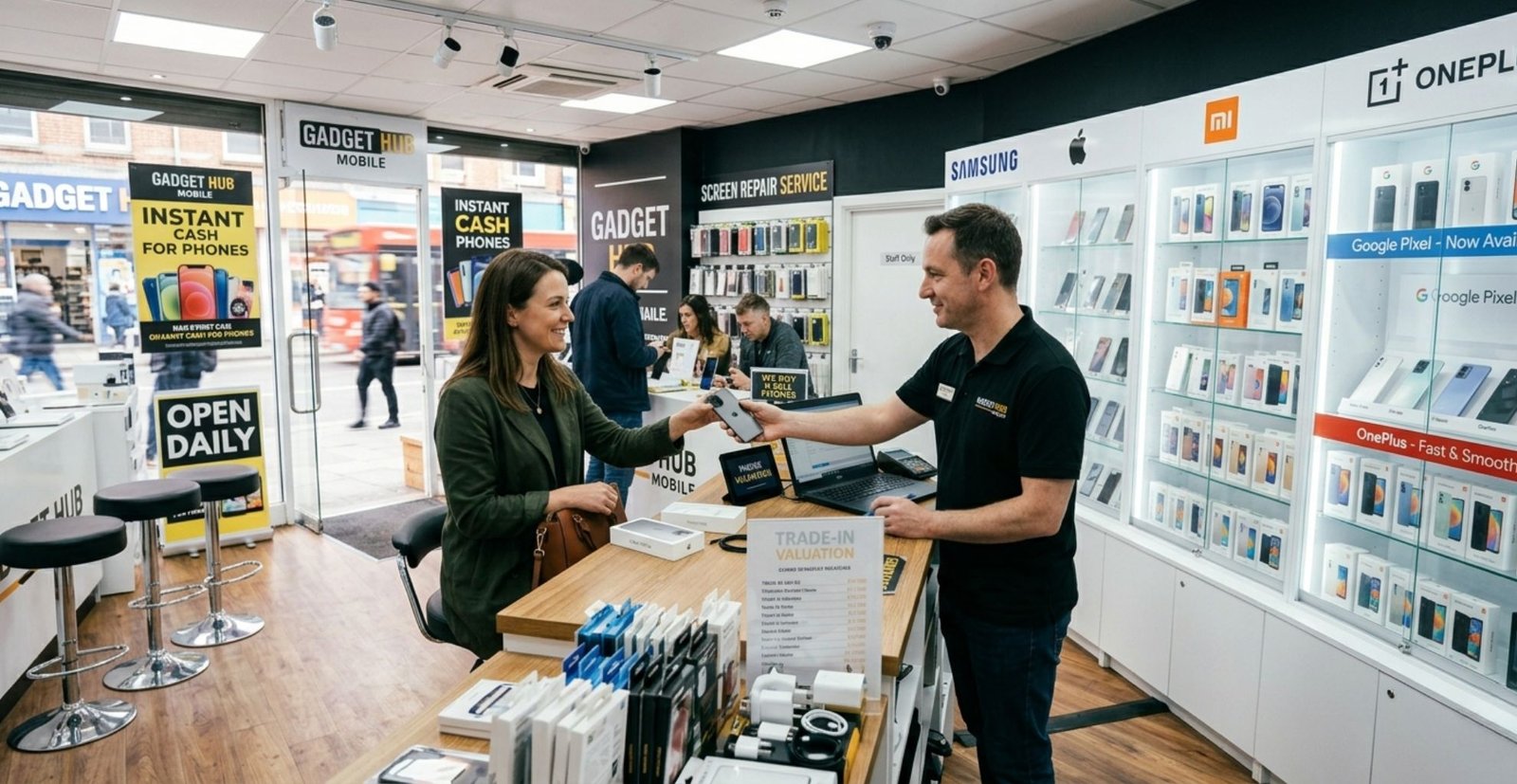
If you’re running a mobile store today, you already know the game has changed. Selling new phones alone won’t cut it. The real margin is in trade-ins, resale, and refurbishment. This article breaks down how mobile buyback software works, why manual processes fail, and how modern systems help you control pricing, device condition, fraud, and customer experience.
We’ll go deep into how a device trade in system improves accuracy, speed, and trust, how it connects your POS, inventory, and resale pipeline, and what features actually matter when choosing a system. You’ll also see real comparisons, workflows, and practical insights from experience working with mobile repair and retail businesses.
Table of Contents
The Reality of Buybacks in Mobile Stores
Let’s not pretend. Most stores are still running buybacks like it’s 2015.
- Staff eyeballs a phone
- Guesses condition
- Offers a price
- Customer negotiates
- Store loses margin or the deal
That’s not a system. That’s chaos.
The problem is simple: without structure, you get
- inconsistent pricing
- slow transactions
- high trade-in variance
- poor customer satisfaction
And worse, you lose trust.
Customers today compare prices online instantly. If your trade-in value feels random, they walk.
What Mobile Buyback Software Actually Does
A proper mobile buyback software system removes guesswork completely.
Instead of relying on staff judgment, it introduces:
| Function | What It Fixes |
|---|---|
| Automated diagnostics | Removes manual errors in assessing device condition |
| Accurate valuation engine | Ensures fair market valuation in real-time |
| Grading system | Standardizes device condition across all staff |
| Data erasure workflows | Protects data privacy and builds trust |
| Inventory sync | Connects buyback to resale and stock |
| Fraud detection tools | Prevents IMEI fraud and fake devices |
Now you’re not guessing. You’re operating.
The Buyback Workflow (Real-World Breakdown)
Here’s how a proper trade in POS software should run inside a store:
Step 1: Device Intake
Customer walks in or submits online. The system logs the device, IMEI, and basic info.
Step 2: Diagnostics & Testing
Using automated or assisted testing, the system checks:
- battery health
- screen condition
- sensors
- functionality
No more guessing. You get on-the-spot assessments.
Step 3: Condition Grading
The software assigns a grade based on:
- cosmetic condition
- performance
- faults
This reduces trade-in variance to near zero.
Step 4: Real-Time Pricing
The system pulls market valuation and calculates:
- resale value
- margin
- risk
You offer a fair trade-in value instantly.
Step 5: Data Erasure
A proper system ensures:
- secure data erasure
- compliance with regulatory standards
- full audit trail
Step 6: Inventory & Resale
Device enters your second hand phone inventory system, ready for:
- refurbishment
- resale
- wholesale
That’s a complete mobile lifecycle loop.
Why Manual Buyback is Killing Your Margins
Let’s be blunt. If you’re not using a system, you’re leaking money.
| Problem | Impact |
|---|---|
| Inconsistent pricing | Lost profit margins |
| Slow processing | High transaction time |
| No diagnostics | Buying faulty devices |
| No fraud checks | Stolen or blacklisted phones |
| Poor tracking | Inventory chaos |
A proper system gives you control variance, speed, and accuracy.
Without it, you’re gambling.
Key Features That Actually Matter (Not the Fluff)
Most software demos look fancy. But here’s what actually matters:
1. Accurate Device Diagnostics
You need real diagnostics, not checklists.
Look for automated tests that reduce human error.
2. Real-Time Market Pricing
Your pricing should reflect:
- demand
- resale potential
- market shifts
Static pricing is useless.
3. Integrated POS & Inventory
Your trade-in POS software must connect with:
- sales
- repairs
- stock
Otherwise, you’re creating silos.
4. Data Security & Compliance
If your system doesn’t support:
- data erasure
- GDPR compliance
- certified workflows
you’re risking your business.
5. Fraud Detection
IMEI checks, blacklist detection, and fraud pattern recognition are mandatory.
Comparison of Leading Buyback Systems
Here’s a simplified breakdown of different approaches in the market:
| Platform Type | Strength | Weakness |
|---|---|---|
| Diagnostics-driven systems | High accuracy in grading | Requires setup |
| Cloud-based buyback platforms | Easy scaling | Limited customization |
| POS-integrated systems | Full workflow control | Higher upfront cost |
| Marketplace-based tools | Access to buyers | Less control over pricing |
The truth? If you run a brick-and-mortar mobile retail business, you need full control, not partial solutions.
Online + In-Store = Real Growth
Modern systems don’t just work in-store.
They allow:
- remote device condition assessment
- online trade-in quotes
- doorstep pickups
This creates an omnichannel experience.
Customers can:
- start online
- finish in-store
That reduces uncertainty and boosts customer experience.
The Hidden Revenue Nobody Talks About
Here’s where it gets interesting.
Buybacks are not just transactions. They’re growth engines.
1. Increased Customer Lifetime Value
A customer who trades in is more likely to:
- upgrade
- return
- stay loyal
2. Upselling Opportunities
Trade-in credit drives:
- accessories
- insurance
- higher-value devices
3. Secondary Market Profits
Refurbished phones generate serious margin if:
- grading is accurate
- pricing is controlled
The Role of Refurbishment & Resale
Your buyback system should connect directly with:
- refurbishers
- resellers
- insurance providers
- OEMs
This creates a circular economy where devices don’t die, they get reused.
That’s not just good business. It’s scalable business.
My Real Take From the Ground
Working with mobile stores, I’ve seen this pattern again and again:
- Stores without systems rely on staff
- Stores with systems rely on data
The difference?
One grows slowly.
The other scales.
If your buyback process is not:
- automated
- real-time
- trackable
you’re stuck.
What RepairsBook Solves
For businesses using RepairsBook, the goal is simple:
Bring everything under one roof:
- buy-back process
- repairs
- POS
- inventory
- resale
Instead of juggling tools, you get:
- unified workflows
- faster transactions
- higher customer satisfaction
And most importantly, control.
Final Thoughts
The mobile industry is no longer about just selling phones.
It’s about managing the full mobile lifecycle:
- buyback
- repair
- resale
- upgrade
A strong mobile buyback software is not optional anymore.
It’s the backbone of a modern mobile store.
If you’re still doing this manually, you’re not competing.
You’re surviving.